
How to Organize Cable & Gadget Accessory Storage
Every modern home is filled with a multitude of cables, chargers, and gadget accessories. Smartphone chargers, laptop cables, headphones, USB hubs, adapters—all of these can quickly become a chaotic mess that takes up space and makes it difficult to find what you need. Organizing your cables not only keeps things tidy, but also extends the life of your accessories by protecting them from damage and tangling.
In this article, we will talk about the most effective ways to organize and store cables and gadget accessories, share practical life hacks and tips that will help you maintain order in your technological arsenal.
Why it's important to organize cable storage
Messy cable storage is not only an aesthetic problem. Tangled wires wear out faster, especially at the bends near connectors. Searching for the right cable among a bunch of others is time-consuming and nerve-wracking. In addition, disorganized storage can be dangerous - tangled cables can cause falls or even short circuits.
Proper storage organization helps:
- Quickly find the right accessory
- Extend the life of cables
- Save space
- Create an aesthetic appearance of the workplace
- Avoid losing small accessories
Cable organizers: ready-made solutions
The easiest way to get organized is to use specialized cable organizers . These accessories are designed specifically to store and organize wires of different types and sizes.
Types of organizers
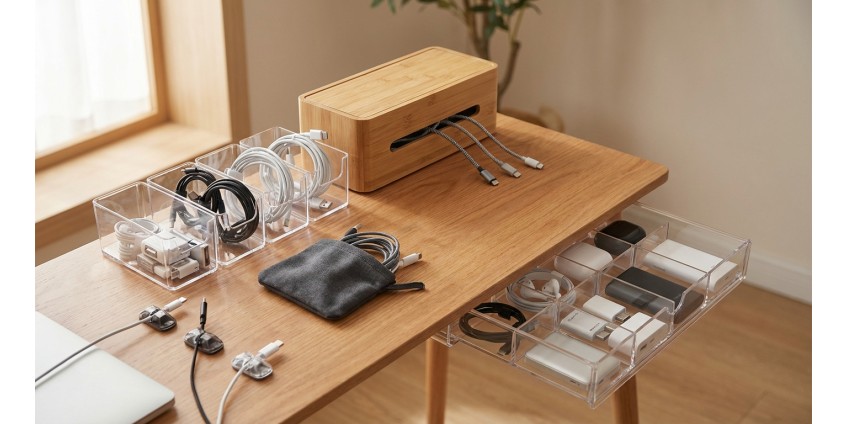
Cable boxes are closed containers that can be used to hide extension cords and excess cables. They are especially useful for organizing the space under a desk or behind a TV, where the most wires tend to accumulate.
Cable clips and holders are small devices that attach to a desk, wall, or other surface. They hold cables in place and prevent them from falling off the desk or getting tangled.
Cable reels and ties are compact accessories for winding cables. Ideal for storing spare or rarely used cables.
Organizer cases are fabric or plastic cases with multiple compartments for storing various accessories. They are convenient for traveling or storing your entire tech kit in one place.
DIY cable organization hacks
You don't have to spend money on specialized organizers — many effective solutions can be created from improvised materials.
Toilet paper sleeves
One of the most popular life hacks is to use cardboard sleeves from toilet paper. Roll the cable into a neat ring, place it in the sleeve, and place it vertically in a box or drawer. This allows you to store the cables separately from each other, and each of them is easy to reach when needed.
Paper binders
Regular office binders (paper clips) are great for organizing cables on your desk. Attach a few binders to the edge of your desk and run your charger cables through them. When you unplug your phone or laptop, the cable won't fall off the desk, but will stay in place.
Cable marking
Use stickers, tags, or colored tape to label your cables. Label each cable with which device it belongs to — this will make it much easier to find the right cable, especially if you have a lot of similar chargers.
Shoe boxes
A regular shoebox can be a great organizer. Make a few holes in the sides of the box, run cables through them, and place power strips and extension cords inside. This way, all the wires will be collected in one place, and only the necessary connectors will remain outside.
Workspace organization
The desktop is the place where the largest number of gadgets and cables are usually concentrated. Organizing this space requires special attention.
Cable management on the desk
Use adhesive cable clips or special trays that attach under the tabletop. They allow you to route cables neatly along the edge of the table or under it, creating a clean and organized look.
For convenient work with various devices, it is useful to have USB hubs that allow you to connect multiple gadgets through one port, reducing the number of separate cables.
Charging station
Create a dedicated place to charge all your gadgets. This could be a separate shelf, drawer, or stand where all your chargers are collected. This way you will always know where your devices are charging and you won’t have to search for a free outlet all over your apartment.
Gadget accessory storage
In addition to cables, every device owner accumulates a lot of small accessories: memory cards, adapters, headphones, styluses, etc. They also need to be stored in an organized manner.
Transparent containers and boxes
Use small, clear containers or plastic boxes with compartments. The transparency allows you to quickly see the contents without opening each box. Sort accessories by type: in one box - memory cards and flash drives, in another - adapters, in a third - headphones.
Travel organizers
If you often travel with gadgets, get a separate travel organizer. It can be a compact case with several compartments that will fit all the necessary cables and accessories. This way you won't forget important things at home and won't have to pack everything anew every time.
Organizing storage by device type
Cables for smartphones and tablets
Mobile charging cables are the most commonly used. Keep a main cable by your bed or desk, and keep spares in an organizer. For convenience, you can have separate cables for charging in different rooms or in your car.
Computer accessories
It's helpful to use labeled boxes or crates to organize your computer accessories. Keep power cables, video cables, and USB cables separate. If you have spare components like RAM or other parts, store them in anti-static bags in labeled containers.
Audio accessories
Headphones and audio cables need special attention as they can get tangled easily. Use special headphone covers or wrap the cable in a figure-eight pattern to prevent kinks and tangling.
Seasonal storage and archiving
Some cables and accessories are used infrequently or seasonally, so it's a good idea to have a separate storage area for them.
Archive boxes
Get a separate box for rarely used accessories. Label it and place it on a mezzanine or in a storage room. Before you put a cable in there, check that it works - there's no point in storing things that don't work.
Inventory
Once a year, take inventory of your cables and accessories. Throw away or donate what you don't use. Old chargers for gadgets you no longer have are just taking up space.
Tips for staying organized
Organizing your storage isn't a one-time thing, it's an ongoing practice. Here are some tips to help you stay organized:
- One in, one out rule : When you buy a new cable or accessory, get rid of the old one if you no longer need it.
- Put things back in their place : after using a cable or accessory, immediately put it back in the organizer
- Don't buy too much : Before buying a new cable, make sure you don't have the same one.
- Regular cleaning : Go through your collection of cables and accessories every few months
Environmentally friendly disposal of unnecessary cables
Do not throw away old cables and electronic accessories in the general waste. They contain materials that can be recycled. Take them to special collection points for electronic waste or to appliance stores that accept old equipment for recycling.
Conclusion
Organizing your cables and gadget accessories is an investment in your comfort and efficiency. Using simple organizers, materials at hand, and following basic principles of organization, you can create a convenient storage system that will save you time and nerves. Start small — organize your workplace, then move on to other areas of the house. The main thing is to find a system that works for you and stick to it consistently. Order in cables is order in life!