
How to Choose an Electric Bike for City and Off-Road: Motor Power, Range, Frame Types, and Operating Rules in 2026
Electric bicycles are rapidly gaining popularity in Ukraine. They are ideal for city trips, active recreation and even extreme off-road routes. If you decide to purchase an electric bicycle, it is important to understand the technical characteristics in order to make the right choice. In this article, we will consider in detail the key parameters of electric bicycles and the features of their operation in 2026.
Motor power: how many watts are needed for a comfortable ride
The power of the electric motor is one of the most important parameters that determines the capabilities of your electric bike. It is measured in watts (W) and directly affects speed, cross-country ability and ability to overcome climbs.
For urban conditions, a motor with a power of 250-350 W is quite sufficient. Such electric bicycles easily accelerate to 25-30 km/h, confidently overcome small climbs and consume a moderate amount of energy. This is the optimal choice for daily commutes to work, walks in parks and movement within the city.
If you plan to ride on rough terrain, steep climbs or off-road, you should consider models with a 500-750 W motor. Such electric bikes have a much larger power reserve, easily overcome difficult areas and can reach speeds of up to 40-45 km/h. They are ideal for fans of active recreation and tourist trips.
The most powerful models with motors from 1000 W and more are designed for extreme off-road and sports use. They are able to overcome steep slopes, ride on sand, snow and other difficult surfaces. However, it is worth remembering that in Ukraine there are restrictions on the use of electric bicycles with a motor power of more than 250 W on public roads without registration.
Range: how to calculate the required battery capacity
Range is the distance an electric bike can travel on a single battery charge. This parameter depends on battery capacity, motor power, riding mode, terrain, and rider weight.
Battery capacity is measured in ampere-hours (Ah) or watt-hours (Wh). The higher the capacity, the greater the range. For city riding, a 10-15 Ah (360-540 Wh) battery is usually sufficient, providing a range of 40-60 km in pedal-assist mode.
For long trips and tourism, batteries with a capacity of 15-20 Ah (540-720 Wh) with a range of up to 80-100 km are recommended. Some premium models are equipped with 20+ Ah batteries, which allow you to travel over 120 km on a single charge.
It is important to understand that the actual range may differ from the manufacturer's stated range. It is affected by the following factors: mode of use (fully electric or pedaling), riding speed, air temperature, load weight and route terrain. In cold weather, the capacity of lithium-ion batteries can decrease by 20-30%.
Types of batteries for electric bicycles
Modern electric bicycles are mainly equipped with lithium-ion batteries. They have an optimal ratio of weight, capacity and service life. The average life of a quality lithium-ion battery is 500-1000 charge-discharge cycles, which is equivalent to 3-5 years of active use.
Batteries can be removable or built into the frame. Removable batteries are more convenient for charging at home, especially if you live in a high-rise building. Built-in batteries are better protected from theft and external influences, but they can be less convenient to charge.
Types of electric bike frames: city, mountain and universal
The frame design determines the purpose of the electric bike and the comfort of its use. Let's consider the main types of frames and their features.
City electric bicycles
Urban models have a classic frame with a low top tube or a completely open design. This geometry provides an easy seat and a comfortable position with a straight back. Urban e-bikes are often equipped with fenders, a rack, a footrest and lighting - everything you need for comfortable daily rides.
They are ideal for riding on paved roads, bike paths, and park paths. The wheels are usually 26-28 inches in diameter with relatively narrow tires for fast rolling on flat surfaces.
Electric mountain bikes
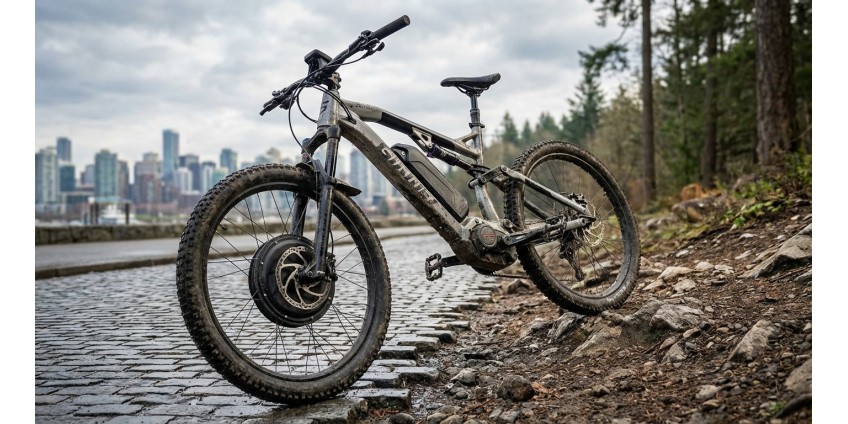
Mountain e-bikes have a sturdy frame with aggressive geometry that provides stability and control over difficult terrain. They are equipped with powerful suspension forks (hardtails) or full suspension (full suspension), wide tires with aggressive tread, and disc brakes.
Such models are designed for off-road riding, forest paths, mountain trails. They confidently overcome obstacles, tree roots, stones and other irregularities. The seating position on a mountain electric bike is more inclined forward for better control on descents.
Universal and tourist models
Universal electric bicycles combine the features of urban and mountain models. They have a moderately strong frame, medium shock absorption and medium-width tires. Such bicycles are suitable for both the city and light off-road - dirt roads, field trails.
Touring electric bikes are designed for long trips with luggage. They have a reinforced frame, mounts for racks and bags, a comfortable fit, and high-capacity batteries.
Additional features and equipment
In addition to the basic parameters, when choosing an electric bike, you should pay attention to additional equipment and functions.
Gear shifting system
Having a high-quality transmission allows you to use the motor's power more efficiently and save battery power. For the city, 7-8 speeds are enough, for off-road it is better to choose models with 21-27 gears. Some premium electric bicycles are equipped with planetary hubs or chainless transmissions, which require minimal maintenance.
Brake system
E-bikes weigh more and are faster than conventional bikes, so the quality of the brakes is critical. Mechanical disc brakes are the minimum standard for an e-bike. Hydraulic disc brakes provide better force modulation and more effective braking, especially in wet conditions.
Display and control system
Modern e-bikes are equipped with informative displays that show speed, distance traveled, battery level, assist mode, and other parameters. Some models support connection to a smartphone via Bluetooth for advanced navigation and statistics.
Rules for operating an electric bicycle in 2026
To ensure that your electric bike lasts a long time and is safe, it is important to follow the rules of operation and maintenance.
Battery storage and charging
Lithium-ion batteries do not like extreme temperatures. The optimal storage temperature is from +10 to +25°C. In winter, it is better to store the battery at home, and not leave it on the balcony or in the garage. For long-term storage (more than a month), a charge of 50-70% is recommended.
Charge the battery only with the original charger in a dry room. Do not leave the battery on charge overnight after fully charging - this will shorten its service life.
Regular maintenance
An electric bike requires the same maintenance as a regular bike: regular chain lubrication, tire pressure checks, brake and shifter adjustments. In addition, it is worth periodically checking all electrical connections, cleaning contacts, and monitoring the condition of the wiring.
After riding in the rain or mud, be sure to wipe down your e-bike, especially the motor unit and battery. Although most components are protected from moisture, prolonged contact with water can lead to corrosion of the contacts.
Road safety
In Ukraine, electric bicycles with a motor up to 250 W are considered regular bicycles, so you don't need a license to ride them. However, it is recommended to always wear a helmet, use reflective elements, and follow traffic rules.
Different rules may apply to more powerful models, so it is worth checking the current legislation before purchasing. It is also useful to insure your e-bike against theft and damage.
Electric bike accessories
For comfortable and safe operation of an electric bike, you will need additional accessories. A high-quality lock will protect your vehicle from theft - it is better to choose U-shaped or folding locks with thick shackles. Locks of various types can be found in specialized stores.
To store personal belongings while traveling, you will need bags for electric vehicles . They are specially designed taking into account the design of electric bicycles and securely attach to the frame or trunk.
If you plan on taking long trips away from power outlets, you might want to consider portable charging stations that will allow you to recharge your e-bike battery in the field. This is especially important for hiking trails and multi-day trips.
Conclusion
The choice of electric bike depends on your needs and conditions of use. For the city, models with a 250-350 W motor, a 10-15 Ah battery, and a comfortable frame are suitable. For off-road use, it is better to choose mountain electric bikes with a power of 500 W or more, a capacious battery, and high-quality suspension.
Pay attention to the quality of the components: brakes, transmission, wheels. Don't skimp on safety - high-quality disc brakes and a strong frame are critical for an electric bike. Proper operation and regular maintenance will extend the life of your electric vehicle for years.
In 2026, the electric bike market offers models for every taste and budget. Determine your priorities, test several options before buying and enjoy an environmentally friendly, economical and comfortable way to get around!