
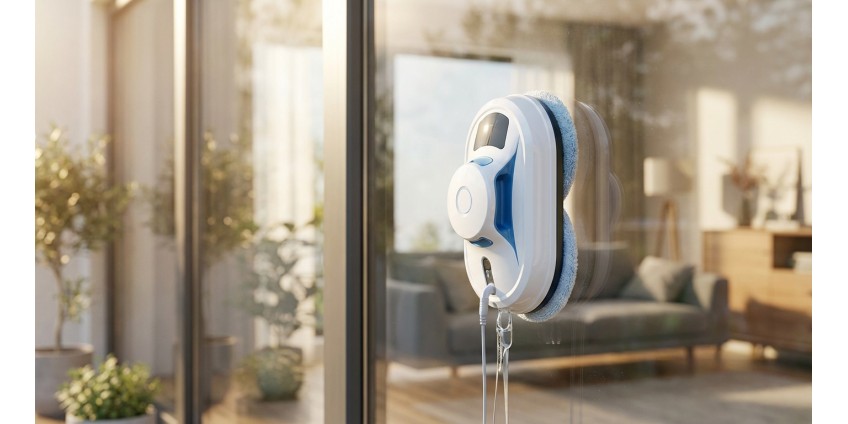
How to Choose a Window Cleaning Robot: Technologies, Safety, and Model Comparisons in 2026
Window cleaning is one of the least favorite household chores for most people. It's labor-intensive, often dangerous, especially for windows on upper floors, and requires considerable time to achieve a flawless result. That's why window cleaning robots have become a real breakthrough in the home appliance industry. In 2026, these devices have become more accessible, safer, and more efficient than ever before.
In this article, we'll take a detailed look at what to consider when choosing a window cleaning robot, what technologies are used in modern models, how safety is ensured during operation, and compare current market offerings.
What is a Window Cleaning Robot
A window cleaning robot is an automated device designed to clean glass surfaces without human intervention. It attaches to the glass using a vacuum pump or magnetic system and independently moves across the surface, removing dirt, dust, and streaks.
Modern models are capable of working not only on windows, but also on mirrors, glass walls, shower enclosures, and even on smooth ceramic tiles. This makes them versatile helpers in household management.
Main Technologies and Operating Principles
Vacuum Retention System
Most window cleaning robots use vacuum technology to stay on vertical surfaces. A built-in pump creates a low-pressure area between the device and the glass, ensuring reliable adhesion even on high floors.
The power of the vacuum pump is a critical parameter—it must be sufficient to hold the device's weight with a safety margin. Quality models have power ranging from 3500 to 5000 Pa, which guarantees safe operation even in case of unexpected power failure.
Navigation and Movement System
Window cleaning robots are equipped with various navigation systems. The simplest models move according to a preset algorithm—zigzag or spiral. More advanced devices use sensors to determine the boundaries of the working surface and automatically calculate the optimal cleaning route.
The movement system is usually based on track or wheel drive. Track models handle unevenness and window frames better, while wheeled ones are faster on smooth surfaces.
Cleaning System
To remove dirt, robots use microfiber cloths or special pads. Some models have separate zones for wet and dry cleaning, which ensures the absence of streaks after cleaning.
The most efficient devices are equipped with a liquid spray system that applies cleaning solution to the surface in measured doses before cleaning. This significantly improves cleaning quality and reduces water consumption.
Safety of Use: What to Pay Attention To
Safety Tether
All quality window cleaning robots come with a safety tether. This is a mandatory safety element that holds the device in case of vacuum system failure. The tether must be strong (withstand a load of at least 150 kg) and long enough to work on large windows.
Backup Power Supply
One of the biggest threats when using window cleaning robots is sudden power outage. Therefore, modern models are equipped with built-in batteries that ensure the vacuum pump operates for 20-30 minutes after disconnection from the mains. This time is sufficient to safely remove the device from the window.
Safety Sensors
Quality robots have edge sensors that prevent the device from falling off the surface. Also useful is the automatic return to the starting point function after completing the cleaning cycle—this allows you to safely remove the robot from the window.
ABIR WD8 Model Review
Among the solutions available on the Ukrainian market, it's worth paying attention to the ABIR WD8 Window Cleaning Robot with Remote Control Gray. This model combines an optimal price-to-functionality ratio, making it an attractive option for home use.
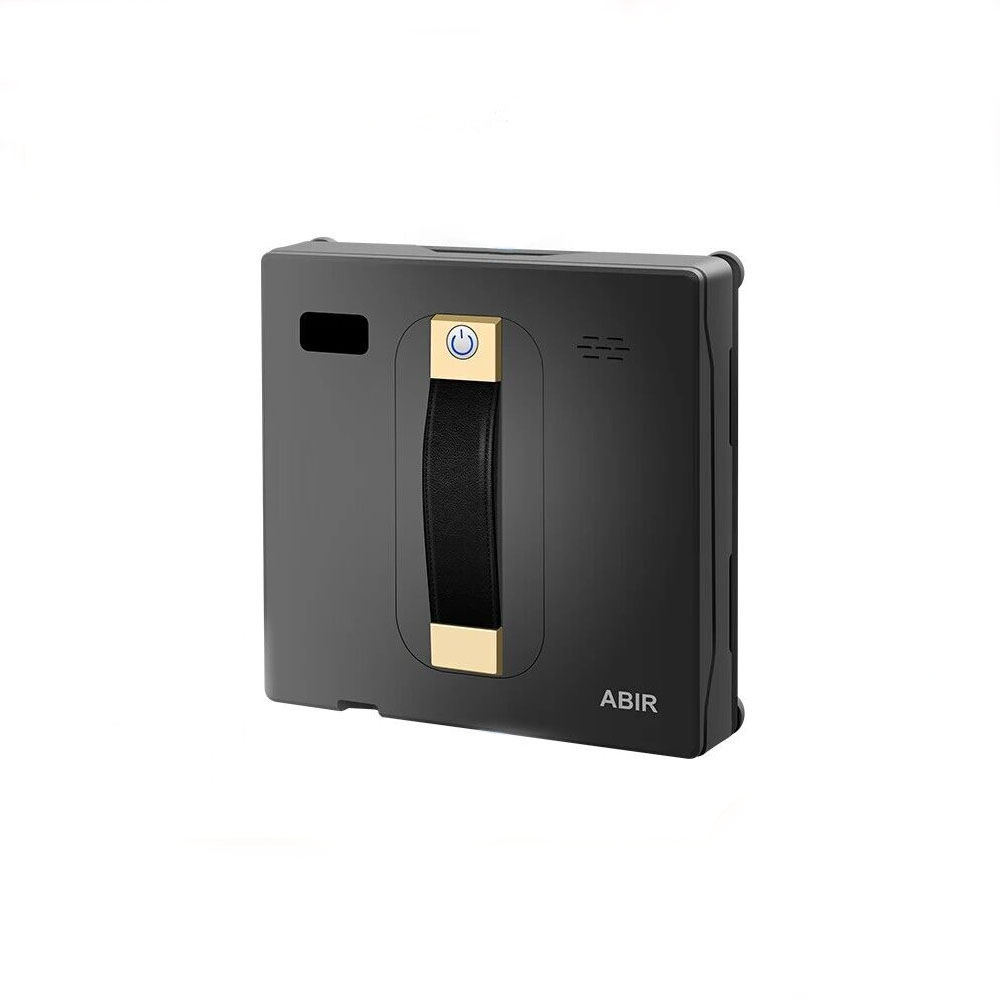
ABIR WD8 Technical Specifications
The device has compact dimensions of 21.6 x 6.2 x 21.6 cm, allowing it to easily maneuver even in hard-to-reach places. The model supports both dry and wet cleaning, making it versatile for different types of dirt.
A particular advantage is the presence of remote control via remote and mobile app. This allows you to control the cleaning process without approaching the window and adjust operating parameters for specific conditions.
ABIR WD8 is designed to work on windows, mirrors, smooth ceramic tiles, and glass walls. This makes it useful not only for washing windows, but also for maintaining cleanliness of shower enclosures and other glass surfaces in the bathroom.
Advantages and Features
The model is manufactured in China and comes with a 1-month warranty, which is standard for devices in this price category. At a price of 9499 hryvnias, ABIR WD8 offers a basic set of functions necessary for effective window cleaning.
Remote control via mobile app allows you to program the movement route, select the cleaning mode, and track the device's status in real time. This is especially convenient for large panoramic windows or hard-to-reach surfaces.
Criteria for Choosing a Window Cleaning Robot
Type and Size of Windows
First of all, assess the type of windows in your home. For standard windows with frames, basic models will do, while for panoramic glazing it's better to choose devices with extended coverage area and intelligent navigation.
Glass thickness also matters—make sure the chosen robot is compatible with your windows. Most models work with glass thickness from 3 to 15 mm.
Power and Cleaning Speed
The power of the vacuum pump directly affects work safety. For home use, models with 3500-4000 Pa power are sufficient. If you plan to wash windows at great heights, it's better to choose more powerful options.
Cleaning speed depends on window area. On average, a quality robot cleans 1 square meter in 3-5 minutes. For an apartment with 5-6 windows, the entire process will take about an hour.
Noise Level
The vacuum pump creates some noise during operation. A comfortable level is up to 65 dB. If noise is a critical factor (for example, there are small children in the house), pay attention to models with acoustic insulation.
Control System
Basic models are controlled by buttons on the body, more advanced ones—by remote control, and top models—via mobile app. The latter option is most convenient, as it allows you to control the robot from anywhere in the home and receive notifications about work completion.
Package Contents and Consumables
Check what's included in the package: microfiber cloths, safety tether, power adapter, cleaning solution. Also find out the availability and cost of replacement cloths—they need to be regularly replaced to maintain cleaning quality.
Care and Maintenance
For long-term and safe operation of the window cleaning robot, follow simple rules:
- Regularly clean cloths after each use or replace with new ones
- Check the condition of the safety tether before each use
- Clean sensors and vacuum openings from dust
- Store the device in a dry place
- Do not use aggressive cleaning agents that can damage rubber seals
With proper care, a window cleaning robot will serve for 3-5 years without the need for serious repairs.
Alternative Solutions for Home Care
If you're interested in automating home cleaning, it's worth paying attention to other product categories as well. For example, in the robot vacuums section you'll find devices for automatic floor cleaning that will perfectly complement the window cleaning robot.
For comprehensive home care, products from the home goods category will also be useful, where a wide range of solutions for maintaining cleanliness and order is presented.
Conclusion: What to Pay Attention to When Buying
Choosing a window cleaning robot in 2026 is an investment in comfort and safety. When choosing a device, be guided by the following criteria:
- Safety: presence of safety tether, backup power, and sensors
- Vacuum system power of at least 3500 Pa
- Type of control according to your needs
- Compatibility with your types of windows and surfaces
- Availability of service and replacement parts
ABIR WD8 is a worthy representative of the mid-price segment, offering basic but reliable functions for home use. For most Ukrainian apartments, this will be quite sufficient.
Remember that even the best robot won't completely replace manual cleaning in hard-to-reach places, but it will significantly simplify regular window care and save your time. A properly chosen device will pay for itself in the first year of use thanks to time savings and the ability to safely wash windows at any height.
Products related to this post
₴5,999 грн. ₴9,499 грн.
Add to Cart

![Collectible figure Labubu Toy [FDM printing]](https://gadgetguys.com.ua/image/cache/catalog/easyphoto/5906/grashka-ruhliva-red-panda-chervona-panda-fdm-druk-1-266x266.png "Collectible figure Labubu Toy [FDM printing]")