



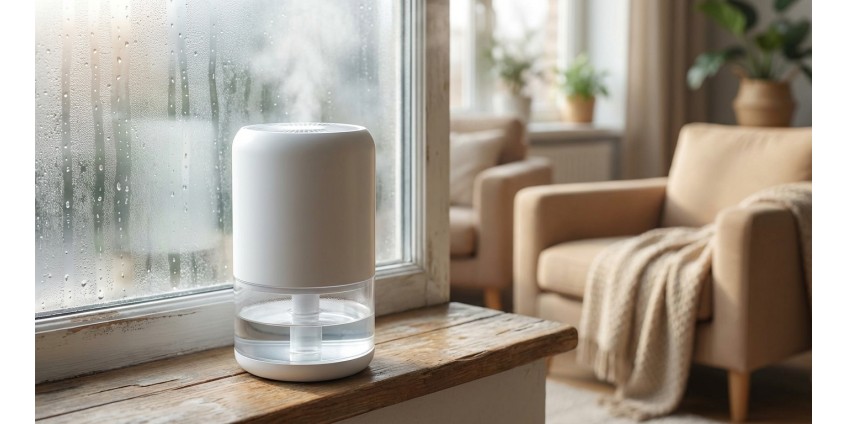
Moisture Absorbers for Home: How to Get Rid of Humidity, Mold and Unpleasant Odors in Your Apartment
Excessive humidity indoors is not just discomfort, but a serious threat to the health of residents and the condition of the home. Mold on walls, musty smell in closets, fogged windows and damaged furniture—all these problems arise from excess moisture in the air. The issue becomes particularly acute during the autumn-winter period, when natural ventilation deteriorates and heating is not yet working at full capacity. In this article, we'll explain how to effectively combat humidity using moisture absorbers and other practical methods.
Why Does Excessive Humidity Occur in an Apartment
Before looking for a solution to the problem, it's worth understanding its causes. Excessive humidity in residential spaces can arise from several factors. First, poor ventilation—if air doesn't circulate properly, moisture isn't expelled outside and accumulates in rooms. Second, building construction features: poor wall insulation, old windows with gaps or, conversely, overly sealed double-glazed windows without ventilation valves.
An additional source of moisture comes from household activities: cooking, showering, drying laundry indoors, even human breathing. On average, a family of four releases up to 10-12 liters of water per day! If this moisture isn't removed, it settles on cold surfaces—windows, exterior walls, in room corners, creating ideal conditions for mold and fungus growth.
Why Is Excessive Humidity Dangerous
Excess moisture in the air is not just an aesthetic problem. Mold releases spores that can cause allergic reactions, asthma, chronic rhinitis and other respiratory diseases. Children and elderly people are especially vulnerable to this. Additionally, high humidity creates a feeling of cold even at normal temperatures, forcing you to spend more on heating.
Material damage can also be significant: wooden furniture warps, wallpaper peels off, metal surfaces rust, clothes and shoes acquire an unpleasant odor. Books, documents and electronics also suffer from excessive humidity. Therefore, combating this problem should be comprehensive and timely.
How Moisture Absorbers Work
Moisture absorbers are special devices or substances that absorb excess moisture from the air. They come in different types: from simple chemical absorbents to electric dehumidifiers. The most common are moisture absorbers based on silica gel or calcium chloride—substances that actively attract water molecules from the surrounding environment.
The principle is simple: the absorbent absorbs moisture, converting it into liquid that collects in a special container. When the substance becomes saturated with water, it needs to be replaced or dried (depending on the type). Such devices are especially effective in small enclosed spaces—closets, wardrobes, bathrooms, storage rooms.
Hanging Moisture Absorbers for Closets and Bathrooms
For localized humidity control, compact hanging moisture absorbers are ideal. They're convenient because they don't take up shelf space and can be placed on hangers or hooks. Our store offers moisture absorbers of various capacities for different needs.
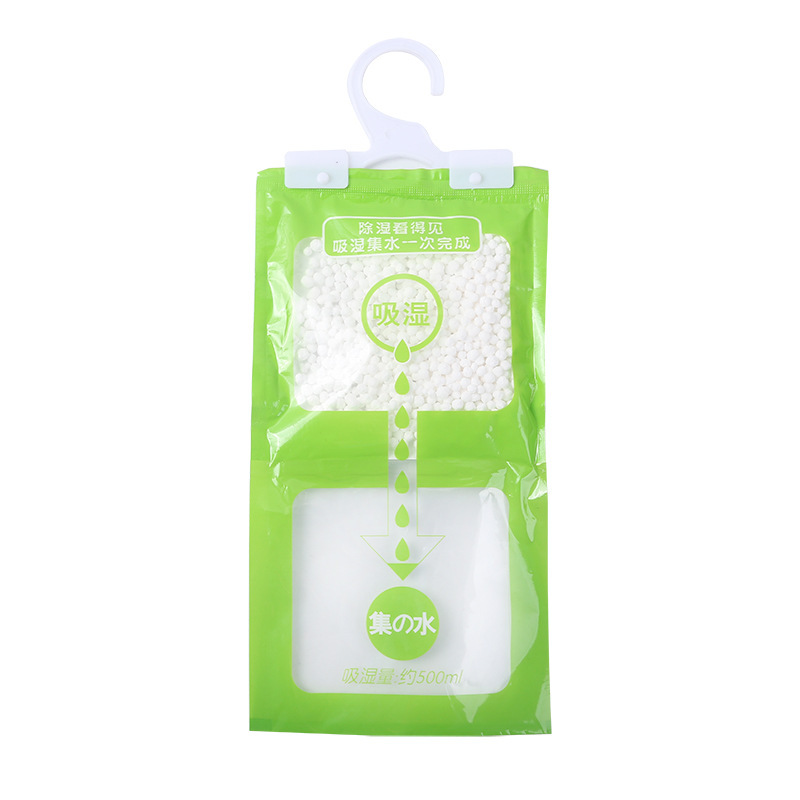
For example, Moisture, Mold, and Odor Absorber for Closets and Bathrooms Hanging 100g Green is a practical solution for wardrobes and clothing closets. It not only absorbs excess moisture, but also neutralizes unpleasant odors, prevents mustiness and mold on fabrics. The saturation indicator function is especially convenient—you'll always know when to replace the moisture absorber.
For smaller spaces or if you need a more economical solution, the Moisture, Mold, and Odor Absorber for Closets and Bathrooms Hanging 80g Green is suitable. It has more compact dimensions and smaller capacity, but handles its task just as effectively in small closets, cabinets or bathrooms.
Where to Place Moisture Absorbers
To achieve maximum effect, it's important to properly place moisture absorbers in the room. Here are some recommendations:
- Clothing and shoe closets—the most vulnerable places where moisture can damage fabrics and leather. Place moisture absorbers on upper shelves or hang them on the clothing rod.
- Bathroom—due to constant contact with water, humidity is always elevated here. A hanging moisture absorber will help dry the air faster after showering.
- Storage room or basement—these spaces are often poorly ventilated, so they're prone to moisture accumulation and mold growth.
- Kitchen cabinets—especially under the sink, where leaks and elevated humidity are possible.
- Walk-in closet—if you have a separate walk-in closet without windows, a moisture absorber becomes a must-have accessory.
- Car—yes, small moisture absorbers can also be used in car interiors to prevent window fogging in winter.
Additional Methods for Combating Humidity
Moisture absorbers are an effective tool, but for a comprehensive solution to the problem, it's worth using other methods as well. Here's what you can do:
Improving Ventilation
Regular airing is the simplest way to reduce humidity. Open windows for 10-15 minutes twice a day, even in winter. If you have exhaust fans in the bathroom and kitchen, turn them on during and after water procedures or cooking. You can also install ventilation valves on windows—they'll provide constant fresh air flow without the need to open windows.
Using Air Dehumidifiers
For large rooms or critical cases of elevated humidity, consider purchasing an electric air dehumidifier. These devices can remove up to several liters of water per day and maintain optimal humidity levels of 40-60%.
Proper Laundry Drying
Try not to dry laundry in living rooms. If there's no balcony, do it in the bathroom with the exhaust fan on or near an open window. Washing machines with a drying function also significantly reduce indoor humidity.
Insulation and Waterproofing
If the humidity problem is related to cold walls or leaks, consider insulating the facade or balcony. Cold surfaces are places of moisture condensation, so their insulation will significantly improve the situation.
Signs of Excessive Humidity Indoors
How do you know if your apartment really has a humidity problem? Here are the main signs:
- Fogged windows, especially in the morning or after cooking
- Dark mold spots on walls, ceiling, in room corners
- Musty, unpleasant smell indoors
- Feeling of dampness, cold even at normal temperature
- Wallpaper peeling, paint flaking
- Rust on metal surfaces
- Deformation of wooden products
- Frequent respiratory illnesses among residents
If you've noticed at least a few of these signs, it's time to act. Start with simple solutions—airing, installing moisture absorbers, and if the problem is serious—contact specialists for ventilation system diagnostics.
Prevention Is Better Than Cure
It's much easier to prevent a humidity problem than to deal with its consequences later. Here are some simple prevention rules:
- Don't block ventilation openings with furniture or decor
- During renovation, use breathable materials, avoid excessive plastic
- Install quality windows with micro-ventilation
- Regularly check plumbing condition—even small leaks create humidity
- Don't leave the bathroom door open immediately after showering
- Use lids on pots while cooking
- Place houseplants that absorb moisture (but don't overdo it—excessive watering will create the opposite effect)
Conclusion
Combating excessive humidity in an apartment is an important task for preserving the health and comfort of the whole family. Moisture absorbers are a simple, affordable and effective solution for local humidity control in closets, bathrooms and other problem areas. They don't require electricity, are safe to use and don't take up much space.
For the best results, combine the use of moisture absorbers with regular airing, proper household organization and, if necessary, the use of electric dehumidifiers. Remember: the optimal humidity level in residential spaces is 40-60%—under these conditions you'll feel comfortable, and your home will remain in perfect condition for many years.
In our online store you'll find quality moisture absorbers and other home products that will help create a healthy microclimate in your home. Take care of your home today—and it will reward you with coziness and comfort!
Products related to this post

₴89 грн. ₴184 грн.
Add to Cart₴79 грн.
Add to Cart
₴23,625 грн. ₴31,540 грн.
Add to Cart