Glass-Ceramic Scraper vs Chemical Cleaners: How to Safely Clean Burnt Residue from a Cooktop in 2026
A glass-ceramic cooktop looks stylish and modern until burnt sugar, melted plastic, or a thick layer of grease appears on it. That's when owners of such cooktops face a choice: reach for aggressive chemicals or try a mechanical cleaning method. In 2026, the answer to this question is quite obvious, and in this article we'll explain exactly why.
Why glass ceramic requires a special approach
Although the surface of glass-ceramic cooktops looks sturdy, it's actually quite vulnerable to scratches. Regular metal scourers, abrasive sponges, or powders with coarse particles leave microscratches on it, which over time accumulate dirt and permanently ruin the cooktop's appearance. That's why the first rule of safe care is to forget about any abrasive materials.
The second nuance is that burnt grease and sugar form a dense crust on the surface that can't simply be washed off with water or a cloth. This is where the dilemma begins: chemicals or mechanical removal.
Problems with chemical cleaners
- Many aggressive gels and sprays contain alkalis or acids that can damage the cooktop's protective coating if used incorrectly.
- The sharp chemical smell lingers in the kitchen long after cleaning.
- Some products require prolonged exposure (10-15 minutes), and heavily burnt stains still need additional scrubbing.
- Not all chemical cleaners are suitable for daily use - there's a risk of damaging the surface with frequent application.
Advantages of mechanical cleaning with a scraper
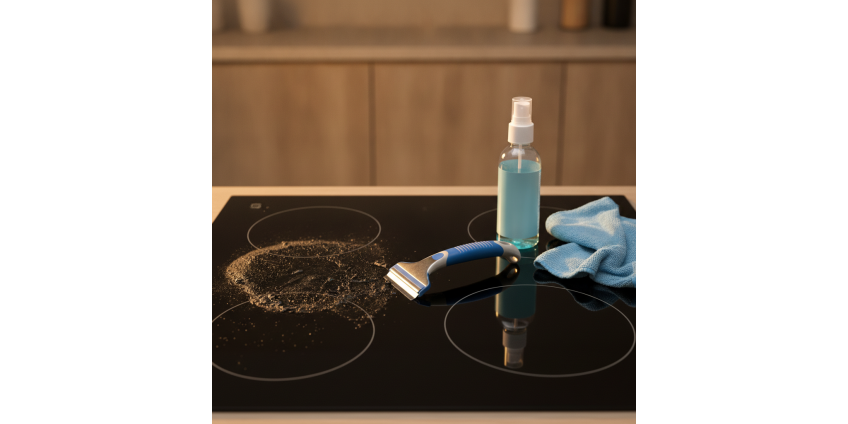
A glass-ceramic scraper is a tool specifically designed to remove burnt residue without damaging the surface itself. The blade is positioned at a certain angle and has enough flexibility to scrape off burnt residue without leaving scratches, provided the tool is held correctly.
Products related to this post

₴198 грн. ₴245 грн.
Add to Cart