



Surge Protectors vs Extension Cords vs Voltage Stabilizers: What You Really Need to Protect Your Home Electronics
Why It's Important to Understand the Difference Between Power Protection Devices
Many people confuse surge protectors, extension cords, and voltage stabilizers, considering them interchangeable devices. In reality, these are completely different equipment with different functions and levels of protection for your electronics. The wrong choice can cost you an expensive laptop, TV, or other electronics, especially in conditions of unstable power supply.
Let's examine in detail what each of these devices does, when you specifically need a surge protector, and when you can't do without a stabilizer. This will help you make the right choice and protect your equipment from unexpected power grid problems.
Extension Cords: Simply More Outlets
Let's start with the simplest device — a regular extension cord. This is a basic electrical device that performs only one function: it increases the number of outlets and allows you to connect equipment at a distance from a stationary outlet. An extension cord provides no protection against voltage surges, impulse spikes, or short circuits.
A typical extension cord consists of a cable, a plug, and a block with several outlets. Some models have a switch that allows you to de-energize all connected devices simultaneously — this is convenient, but it's not protection. An extension cord simply transfers electricity from point A to point B without any signal processing.
When a Simple Extension Cord Is Sufficient
An extension cord is suitable for simple household appliances that are not sensitive to power quality:
- Desk lamps and lighting
- Phone chargers (although protection is still better)
- Household fans
- Simple kitchen appliances without electronics
It's important to understand: if a voltage spike occurs in your network, the extension cord will transmit it to all connected devices without any protection. Therefore, it's categorically unsuitable for expensive electronics.
Surge Protectors: The First Line of Defense
A surge protector looks similar to an extension cord but has a fundamentally different internal structure. It's equipped with special components that filter the electrical signal and protect connected equipment from several types of threats.
What a Surge Protector Protects Against
A quality surge protector provides protection from:
- High-frequency interference — electromagnetic disturbances created by other appliances in the network
- Impulse spikes — short-term voltage jumps that occur when powerful appliances are turned on
- Short circuits — thanks to a built-in fuse or circuit breaker
- Overload — if the total power of connected appliances exceeds the permissible limit
Inside the surge protector are varistors (special semiconductor elements), capacitors, and inductance coils that smooth out sharp voltage jumps and filter high-frequency interference. This makes the power supply cleaner and safer for sensitive electronics.
What Equipment Needs a Surge Protector
A surge protector is the minimum necessary level of protection for:
- Computers and laptops
- TVs, especially modern Smart TVs
- Audio equipment and home theaters
- Gaming consoles
- Printers and other office equipment
- Charging stations for gadgets
If you're looking for reliable surge protectors, adapters, and extension cords, pay attention to protection characteristics and maximum load capacity.
Voltage Stabilizers: Maximum Protection
A voltage stabilizer is a serious device that actively regulates output voltage, maintaining it at a stable level regardless of fluctuations in the input network. While a surge protector only smooths out short-term spikes, a stabilizer constantly monitors and corrects voltage.
How a Stabilizer Works
The operating principle depends on the type of stabilizer (relay, electronic, inverter), but the essence is the same: the device constantly measures input voltage and, if it deviates from the norm (220V ±10%), automatically corrects it to a stable value. This happens in real time, so connected equipment always receives quality power.
When You Can't Do Without a Stabilizer
A stabilizer is critically important in the following situations:
- Constant voltage fluctuations in the network — if lights regularly dim or brighten
- Low voltage — typical for private sectors and remote areas
- For expensive household appliances — refrigerators, air conditioners, washing machines
- For professional equipment — studio equipment, medical devices, servers
- In regions with unstable power supply
A stabilizer is especially important for equipment with compressors (refrigerators, air conditioners) — low voltage can lead to their overheating and failure.
Can a Surge Protector Replace a Stabilizer and Vice Versa
This is the most common question, and the answer is unequivocal: no, these devices are not interchangeable. They solve different problems:
A surge protector protects against short-term impulse interference and spikes but doesn't correct constantly low or high voltage. If your network constantly has 190V instead of 220V, the surge protector won't do anything about it — it will simply pass those 190V through.
A stabilizer maintains stable voltage, but not all models filter high-frequency interference well. Therefore, the ideal solution for maximum protection is a stabilizer + surge protector in series.
Important Characteristics When Choosing
For Surge Protectors
- Maximum power — should exceed the total power of connected appliances
- Surge protection level — measured in joules, the more the better
- Response time — speed of reaction to a voltage spike
- Presence of grounding — critically important for safety
- Cable length — should match your needs
For Stabilizers
- Input voltage range — how wide a range of fluctuations it can compensate for
- Stabilization accuracy — how precisely the output voltage is maintained
- Response speed — especially important for sensitive equipment
- Power — should match the power of connected equipment with a 20-30% margin
Additional Solutions for Equipment Protection
In addition to basic power protection devices, it's worth paying attention to additional accessories. For example, if you travel frequently or use equipment with different types of plugs, the HOCO AC6 Unimpeded universal conversion plug Black power adapter will be useful. This universal adapter supports 100-250V voltage and maximum power of 2.5 kW, making it a convenient solution for travel, although it doesn't convert network voltage and doesn't provide protection against surges.
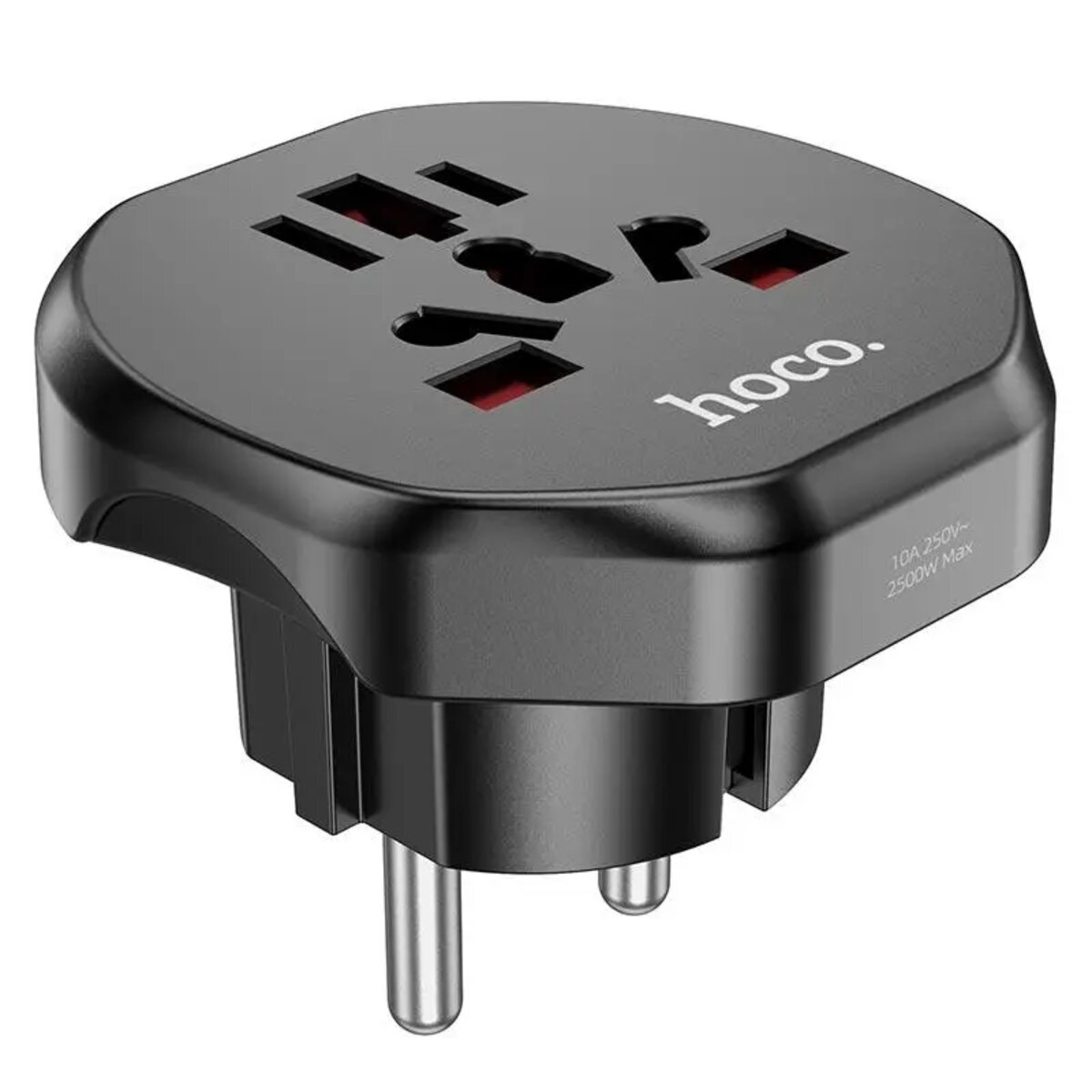
For those looking for a wide range of solutions for connecting and protecting equipment, we recommend browsing the catalog of surge protectors, adapters, and extension cords, which features various options for any needs.
Common Mistakes When Choosing Equipment Protection
Mistake 1: Buying the cheapest extension cord for expensive equipment. Saving 200-300 hryvnias can result in losing equipment worth tens of thousands.
Mistake 2: Ignoring maximum power. If you connect equipment with a total power of 3 kW to a 2 kW surge protector, the protection won't work properly.
Mistake 3: Believing that one surge protector will solve all problems in a region with constantly low voltage. Here you need a stabilizer.
Mistake 4: Connecting surge protectors in series ("daisy-chaining"). This reduces protection effectiveness and can be dangerous.
Mistake 5: Not paying attention to the presence of grounding. Without grounding, protection only works partially.
Practical Tips for Operation
Even the best surge protector has a limited lifespan. Varistors, which absorb the impact of voltage spikes, gradually degrade. After several powerful spikes, a surge protector can turn into a regular extension cord without showing any external signs of its "fatigue." Therefore, quality models have a protection functionality indicator.
Stabilizers also require attention: check ventilation openings (they shouldn't be blocked), periodically clean from dust, especially if the device is installed on the floor or in a closed niche.
Don't connect powerful heating appliances to surge protectors: heaters, irons, kettles. For them, a regular outlet or a separate stabilizer of appropriate power is sufficient.
Conclusions: What to Choose for Your Situation
Let's summarize recommendations depending on the situation:
If you have a stable power grid without noticeable problems: a surge protector will be sufficient to protect computers, TVs, and other electronics. This is the optimal balance of price and protection.
If you observe constant voltage fluctuations: a stabilizer is absolutely necessary, especially for expensive household appliances. For maximum protection of computer equipment, you can additionally use a surge protector after the stabilizer.
For simple appliances without electronics: a regular extension cord is sufficient, but make sure its power matches the load.
For critically important equipment: stabilizer + surge protector + uninterruptible power supply (UPS) — this is the maximum level of protection.
Remember: spending on quality power protection is not an unnecessary expense, but an investment in the longevity of your equipment. One network accident can cost significantly more than a good stabilizer or surge protector. Choose protection according to real needs and operating conditions, and your equipment will serve you long without unexpected breakdowns.
Products related to this post

₴999 грн.
Add to Cart
₴899 грн. ₴1,214 грн.
Add to Cart
₴1,899 грн. ₴2,564 грн.
Add to Cart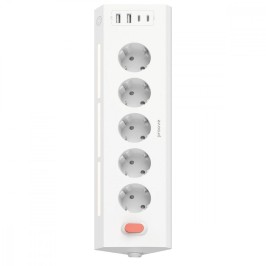
₴1,399 грн. ₴1,889 грн.
Add to Cart