



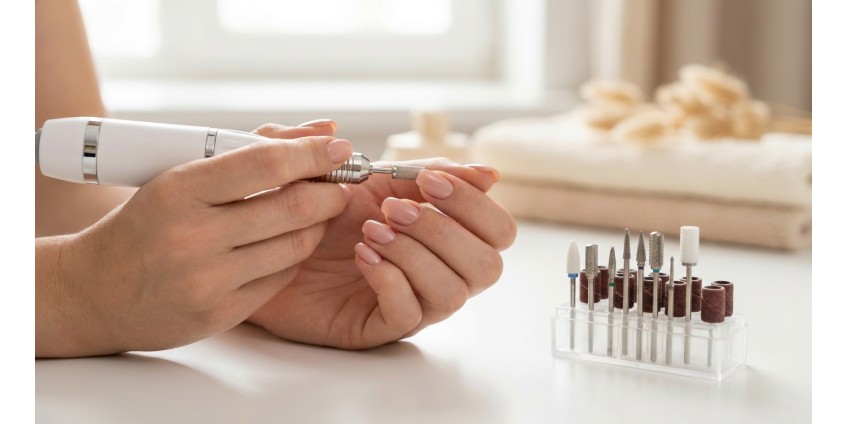
How to Choose a Nail Drill for Home Manicures in 2026: Rotation Speed, Bits, Noise Levels, and Safety Techniques
Home manicures have long ceased to be a compromise—today they are a full-fledged alternative to salon procedures. The key tool for quality nail care at home is a nail drill. If you've decided to master e-file manicures or pedicures, it's important to understand what to look for when choosing a device. In this article, we'll discuss the main characteristics of nail drills, types of bits, noise levels, and safe usage guidelines.
What is a Nail Drill and Why Do You Need It
A nail drill is an electric device with a rotating bit used for treating nails and cuticles. Unlike traditional cutting manicures, the e-file method is safer, more hygienic, and less traumatic. A nail drill allows you to carefully remove cuticles, buff the nail plate, remove old coatings, and prepare nails for gel polish application.
The main advantage of a home nail drill is saving time and money. Instead of regular salon visits, you can independently maintain well-groomed nails. Additionally, e-file manicures are suitable for people with sensitive skin around the nails, as they minimize the risk of cuts and inflammation.
Rotation Speed: How Much Power Do You Need for Home Use
One of the most important characteristics of a nail drill is rotation speed, measured in revolutions per minute (RPM). For home use, the optimal range is considered to be 20,000–35,000 RPM. This power is sufficient for performing standard procedures: removing gel polish, treating cuticles, and buffing nails.
Professional models can reach 50,000 RPM and higher, but for beginners, such power is not necessary. On the contrary, excessively high speeds can lead to overheating of the nail plate or skin injury if you don't yet have enough experience working with a nail drill.
It's important that the device has speed control. This allows you to adapt the drill's operation to specific tasks: lower speeds are needed for cuticle removal, while higher speeds are for gel polish removal. Control can be stepped or smooth—the latter option is more convenient for precise adjustment.
Types of Nail Drills: Pen-Style or Desktop Unit
Nail drills for home use are divided into two main types: pen-style and desktop units with a separate handpiece.
Pen-style drills are compact, lightweight, and convenient for beginners. They resemble a regular pen, with all components housed in one body. Such models typically have lower power (up to 25,000 RPM), but for home manicures this is quite sufficient. The main advantage is mobility and ease of use.
Desktop drills consist of a control unit and a separate handpiece connected by a cable. Such devices are more powerful, have more operating modes, and are better suited for regular use. The handpiece is lighter than a pen-style drill, which reduces hand strain during prolonged work. If you plan to do manicures not only for yourself but also for loved ones, you should consider a desktop option.
Nail Drill Bits: Types and Their Uses
The effectiveness of a nail drill depends not only on the device itself but also on properly selected bits. They differ in shape, material, and degree of abrasiveness.
Bit Materials
- Ceramic—the most popular for home use. They don't overheat the nail plate, are durable, and suitable for most procedures.
- Diamond—have varying abrasiveness (from coarse to ultra-fine). Used for cuticle treatment, nail buffing, and gel polish removal.
- Corundum—similar to diamond but less aggressive. Suitable for delicate treatment.
- Steel (carbide)—have notches, effective for removing artificial material, but require careful use.
- Silicone and rubber—for polishing and buffing nails to a shine.
Bit Shapes
- Ball—for cuticle removal and treating sidewalls.
- Cylinder—for gel polish removal and length correction.
- Cone—for working with pterygium (thin film on the nail under the cuticle).
- Flame—universal shape for cuticle and sidewall treatment.
- Drum—for caps during pedicures.
For beginners, it's recommended to purchase a basic set of 5-7 bits of different shapes and abrasiveness. This will allow you to perform basic procedures and gradually master the technique of working with a nail drill.
Noise Level: Why It Matters
The noise level of a nail drill is a parameter often ignored when choosing, but it significantly affects usage comfort. A loud device can be irritating not only to you but also to those around you, especially if you do manicures in the evening.
The optimal noise level for a home nail drill is up to 50-60 dB. This is comparable to normal conversation. Professional devices can be louder (up to 70 dB), but for home use this is unnecessary discomfort.
Noise level is affected by the motor type. Brushless motors run quieter, last longer, and don't require carbon brush replacement. Brushed motors are cheaper but louder and less durable.
Additional Features and Ease of Use
Modern nail drills for home use can have a number of additional features that enhance work comfort:
- Reverse—ability to change the direction of bit rotation. Useful for left-handed users and for working on different hands.
- Foot pedal—allows you to control the drill with your foot, leaving your hands free.
- Display—shows current rotation speed and other parameters.
- Lighting—built-in LED light for better visibility of the work area.
- Automatic shut-off—protection against overheating during prolonged work.
Also pay attention to the weight of the pen or handpiece. For prolonged work, lighter models weighing up to 150 grams are more comfortable. Ergonomic shape and non-slip coating also make using the drill more pleasant.
Safety Techniques When Working with a Nail Drill
A nail drill is a tool that requires careful handling. Failure to follow safety rules can lead to injuries, burns, or damage to the nail plate.
Basic Safe Usage Rules
- Start with low speeds. Gradually increase speed as you gain experience.
- Don't press hard. The drill works through rotation, not pressure. Excessive pressure can damage the nail plate.
- Hold the drill at the correct angle—approximately 45 degrees to the nail.
- Don't linger in one spot. Keep the bit moving constantly to avoid overheating.
- Use bits with appropriate abrasiveness. Coarse bits can injure the skin.
- Sterilize bits after each use with special solutions or in a dry heat sterilizer.
- Wear a protective mask—working with a drill creates dust that shouldn't be inhaled.
- Avoid working on wet nails—this can lead to nail plate delamination.
If you're a beginner, it's recommended to first practice on tips (artificial nails) or take a basic e-file manicure course online or in person.
Caring for Your Drill and Bits
Proper care of your nail drill will extend its service life and ensure hygienic procedures. After each use, clean the bits with a special brush to remove material residue and dust. Regularly disinfect bits in special solutions or a sterilizer.
Wipe the device itself with a damp cloth, avoiding moisture getting inside. Store the drill in a dry place, preferably in a case or bag. If your model has a brushed motor, periodically check the condition of the carbon brushes and replace them when necessary.
How to Choose a Nail Drill: Buyer's Checklist
Let's summarize the main criteria for choosing a nail drill for home use:
- Power: 20,000–35,000 RPM for beginners and home use
- Speed control: mandatory, preferably smooth
- Type: pen-style for occasional use, desktop for regular use
- Noise level: up to 60 dB
- Presence of reverse and other additional features as needed
- Included accessories: basic bit set included is a plus
- Pen/handpiece weight: up to 150 g for comfortable work
- Brand and warranty: prefer trusted manufacturers with warranty
If you're looking for quality nail drills for manicures and pedicures, pay attention to user reviews and technical specifications. It's also useful to check out the manicure tools section, where you'll find related products for home nail care.
Conclusion
Choosing a nail drill for home manicures is an investment in your comfort and beauty. A properly selected device will allow you to save on salon procedures, give you the freedom to experiment with nail designs, and ensure professional results at home. The main thing is not to rush your choice, carefully study the specifications, and start with basic models, gradually improving your skills. Remember safety techniques, properly care for your tool, and your nails will always look well-groomed and neat. Additionally, you may need products from the beauty and health section for comprehensive home care.
Products related to this post

₴79 грн.
Add to Cart
![Collectible figure Labubu Toy [FDM printing]](https://gadgetguys.com.ua/image/cache/catalog/easyphoto/5906/grashka-ruhliva-red-panda-chervona-panda-fdm-druk-1-266x266.png "Collectible figure Labubu Toy [FDM printing]")