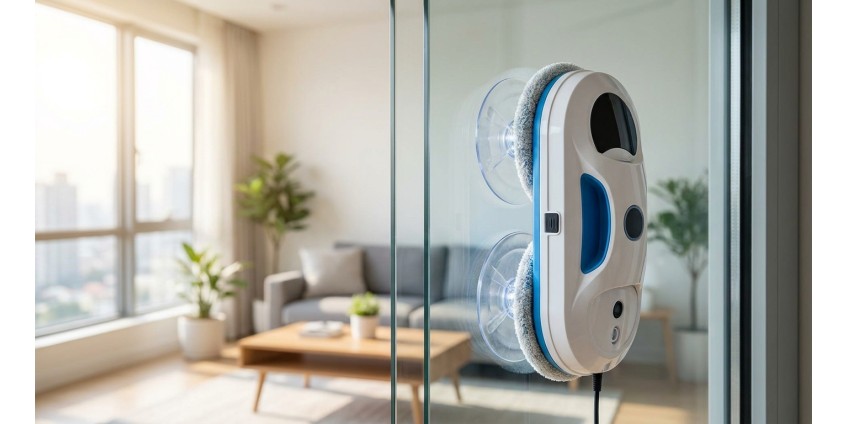
How to Choose a Window Cleaning Robot in 2026: Technology, Mounting Safety, and Comparison with Traditional Cleaning
Window cleaning is one of the most labor-intensive and dangerous household tasks, especially when it comes to multi-story buildings or panoramic glazing. In 2026, home cleaning automation technologies have reached such a level that window cleaning robots have become a real alternative to traditional methods. But how do you choose the right device, what should you pay attention to, and is it worth abandoning the familiar mop at all?
What is a Window Cleaning Robot Vacuum
A window cleaning robot is a compact automated device that attaches to glass surfaces using a vacuum system and cleans them independently. Unlike regular floor robot vacuums, these gadgets work on vertical surfaces and are designed for cleaning windows, mirrors, glass partitions, and even ceramic tiles.
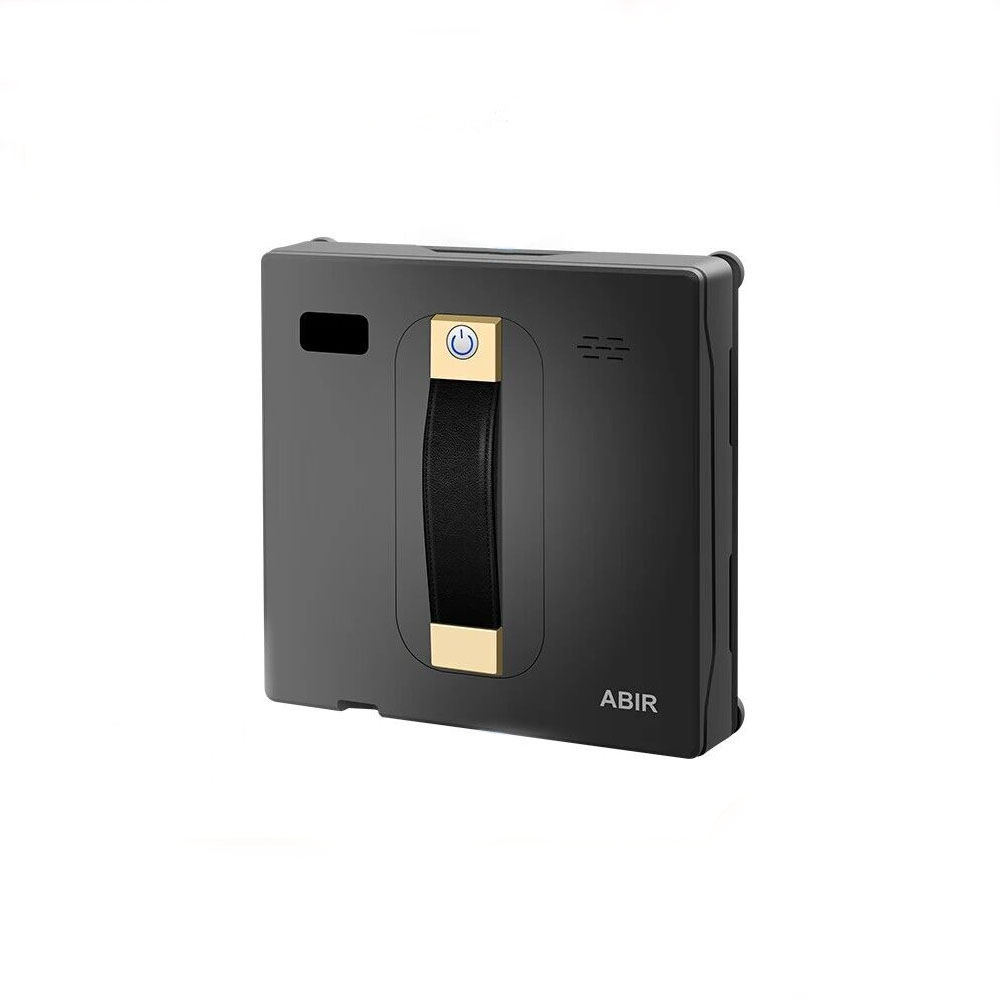
Modern models, such as the ABIR WD8 window cleaning robot vacuum with remote control, combine both dry and wet cleaning functions. This device is equipped with a remote control and mobile app, allowing you to control the cleaning process even from another room.
Key Technologies in Window Cleaning Robots in 2026
Vacuum Mounting System
The foundation of safe operation for any window robot is a reliable mounting system. Modern devices use powerful vacuum pumps that create negative pressure between the robot body and the glass surface. This allows the gadget to hold even on vertical and inclined surfaces.
Most models are equipped with emergency power systems — built-in batteries that maintain the vacuum pump operation even in case of power outage. This is critically important for safety, as a device falling from height can lead to its damage or injury to people.
Navigation and Route Planning Systems
Window cleaning robots in 2026 are equipped with intelligent navigation systems that automatically determine surface dimensions and build an optimal cleaning route. Devices move in zigzag or spiral trajectories, ensuring complete area coverage without gaps.
Edge sensors allow the robot to detect the boundaries of the glass surface and not go beyond the window frame. This is especially important for frameless structures and non-standard shaped panoramic windows.
Cleaning Systems: Dry and Wet Cleaning
Modern window robots use a combined approach to cleaning. First, the device sprays cleaning liquid or uses a damp cloth to soften dirt, then special rubber squeegees and microfiber collect the dirt, leaving the surface perfectly clean without streaks.
Some models have removable microfiber cloths that can be washed and reused. This saves money on consumables and makes operation more environmentally friendly.
Mounting Safety: What to Pay Attention To
Vacuum Pump Power
The more powerful the pump, the more reliable the mounting. Check the technical specifications — good models have suction power from 2500 to 3500 Pa. This ensures stable holding even on uneven or slightly textured surfaces.
Backup Power
A built-in battery is mandatory, maintaining the vacuum system operation for 15-30 minutes after the main power is disconnected. This gives time to safely remove the device or wait for power restoration.
Safety Rope
Most manufacturers equip robots with a safety rope that attaches to the window frame or other reliable support. Even if the vacuum system fails, the rope will prevent the device from falling. This is especially important for use on upper floors.
Sensors and Sound Signals
Quality models are equipped with sensors that monitor vacuum levels and emit a sound signal if it drops. This allows you to respond promptly to a potential problem before it becomes critical.
Comparison with Traditional Cleaning
Time and Effort
Traditional window cleaning requires significant physical effort and time. You need to prepare a solution, find a ladder or chair, carefully wipe every centimeter of glass, and then polish the surface to a shine. One standard window can take from 15 to 30 minutes.
A window cleaning robot works autonomously — you simply attach it to the glass, press the start button, and go about your business. Cleaning time depends on surface size, but averages 10-20 minutes per window, and all this without your participation.
Cleaning Quality
The robot's work result depends on the quality of cloths and cleaning liquid. With proper use, the device provides uniform cleaning without streaks and spots. However, complex dirt, such as old bird droppings or construction debris, may require preliminary manual cleaning.
Traditional cleaning allows a more flexible approach to different types of dirt — you can change pressure force, use different products and tools. An experienced person often achieves better results on difficult areas.
Safety
This is the biggest advantage of robotic systems. Cleaning windows at height is a dangerous activity that leads to numerous injuries every year. The robot completely eliminates this risk — you don't need to lean out of the window or stand on a shaky ladder.
Economic Efficiency
The initial cost of purchasing a window cleaning robot (from 9000 to 15000 UAH for a quality model) may seem significant. However, when compared with the cost of professional cleaning services (300-500 UAH per window), the device pays for itself after 20-30 uses.
Consumables (cloths and cleaning liquids) are inexpensive, especially if you use reusable microfiber cloths and universal glass cleaners. By the way, in our store you will find a wide range of glass cleaning products that are suitable for both manual and automated cleaning.
What to Pay Attention to When Choosing
Coverage Area and Dimensions
Check if the robot is suitable for your windows. Some models have minimum area limitations (for example, not less than 50×50 cm) due to navigation system features. Compact devices handle small windows and complex shapes better.
Surface Types
Most robots are designed for smooth glass surfaces, but some models can work with ceramic tiles, mirrors, and even glossy furniture facades. The ABIR WD8, for example, is suitable for windows, smooth ceramic tiles, mirrors, and glass walls.
Control and Automation
Basic models have only buttons on the body, more advanced ones have a remote control, and top models also support mobile apps. The app allows you to configure operating modes, receive notifications about cycle completion, and monitor battery charge.
Noise Level
The vacuum pump creates noise that can be quite noticeable. If silence is important to you, look for models with noise levels up to 65 dB — this is comparable to normal conversation.
Caring for Your Window Cleaning Robot
For the device to serve long and effectively, regular care is needed. After each use, clean the cloths from dirt — they can be washed in warm water with mild detergent. Check the condition of rubber squeegees — if they are worn, they need to be replaced.
Once a month, wipe the body and vacuum surface with a damp cloth. For this, you can use SunnyOct cleaning wipes, which effectively remove stains and dirt. Store the robot in a dry place, avoiding direct sunlight.
Additional Usage Possibilities
Window cleaning robots can be used not only for their direct purpose. They handle cleaning glass shower cabins, large mirrors, glass doors and partitions excellently. Some users even apply them for washing glossy kitchen tiles or polished furniture facades.
If you have a winter garden or large panoramic windows, the robot will become an indispensable helper, as cleaning such surfaces manually is an extremely labor-intensive task.
Conclusions: Is It Worth Buying a Window Cleaning Robot
A window cleaning robot vacuum is an investment in comfort and safety. If you have many windows, panoramic glazing, or you simply don't like washing windows, this device will significantly simplify your life. The main advantages are autonomous operation, safety, and stable cleaning quality.
When choosing a model, pay attention to the reliability of the mounting system, availability of backup power and safety rope. Don't skimp on safety — it's better to choose a proven model from a well-known manufacturer. Devices such as the ABIR WD8 offer an optimal balance of functionality, safety, and price.
Traditional window cleaning remains relevant for complex dirt and small surfaces, but for regular maintenance of large glass areas, the robot becomes an ideal solution. In 2026, these technologies have become mature and accessible enough for everyone to afford to automate this unloved type of household chore.
If you're looking for ways to make your life more comfortable, also check out our sections robot vacuums and home products — there you will find many useful solutions for automating household tasks.
Products related to this post

₴519 грн.
Add to Cart
₴5,999 грн. ₴9,499 грн.
Add to Cart