



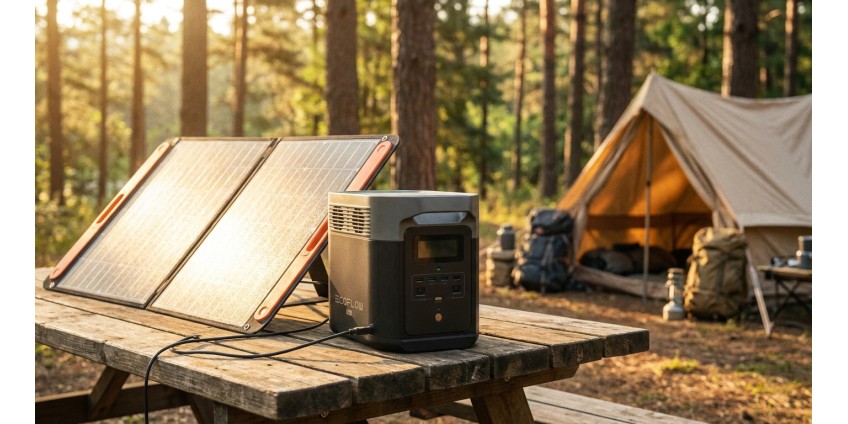
How to Choose a Portable Power Station for Camping and Emergency Power in 2026: Capacity, Output, Socket Types, and Solar Panel
Portable power stations have become indispensable companions for travelers, outdoor enthusiasts, and those who want to be prepared for any unexpected situations. In 2026, the market offers a wide selection of models with various specifications, and choosing the right device can significantly simplify your life during camping or provide critically important power in case of emergency outages.
What is a Portable Power Station and Why Do You Need One
A portable power station is an autonomous device with a built-in high-capacity battery that allows you to charge and power various electronic devices without access to the main electrical grid. Unlike regular power banks, power stations have significantly larger capacity (from 200 Wh to several kilowatt-hours) and can power not only smartphones and tablets, but also laptops, mini-fridges, power tools, and even household appliances.
Such stations become especially relevant for:
- Camping and tourist trips where you need to charge gadgets and power lighting
- Emergency backup power during power outages
- Remote work where there's no access to the electrical grid
- Organizing outdoor events
- Car or camper travel
Key Characteristics of Portable Power Stations
Battery Capacity
Capacity is the most important parameter that determines how many times you can charge your devices or how long you can power certain equipment. It's measured in watt-hours (Wh).
To understand the scale: a 500 Wh station can charge a smartphone approximately 40 times, a laptop 5-7 times, or power a mini-fridge for 7-10 hours. A 1000 Wh station doubles these figures.
Capacity choice depends on your needs:
- 200-500 Wh — for short trips and charging gadgets
- 500-1000 Wh — for multi-day camping and powering small appliances
- 1000-2000 Wh — for extended autonomous use and household appliances
- Over 2000 Wh — for full home backup power
Output Power
Power (measured in watts) shows which devices you can connect to the station simultaneously. It's important to understand the difference between rated and peak power:
Rated power — this is the continuous power that the station can deliver for an extended time. For example, 500 W will allow you to power a laptop (60-100 W), lighting (20-40 W), and charge a smartphone simultaneously.
Peak power — a short-term maximum needed to start some devices with electric motors (refrigerators, power tools). Usually 2-3 times higher than rated power.
Socket and Port Types
Modern portable stations offer various connection options:
- AC outlets 220V — for connecting standard household appliances and chargers
- USB-A ports — for smartphones, tablets, and accessories
- USB-C ports with Power Delivery — for fast charging modern gadgets and laptops
- DC ports (12V) — for car accessories and specialized equipment
- Car socket — standard 12V cigarette lighter
It's optimal to choose a station with various ports to be able to charge several devices of different types simultaneously.
Integration with Solar Panels
One of the biggest advantages of modern portable power stations is the ability to recharge from solar panels. This makes them a practically inexhaustible energy source during extended trips.
Advantages of Solar Charging
Using solar panels provides several important benefits:
- Complete autonomy — no need to search for an outlet to recharge
- Eco-friendliness — using renewable energy
- Savings — free solar energy
- Reliability — ability to recharge even in remote locations
What to Look for When Choosing Solar Panels
When choosing solar panels for your station, it's important to consider:
Panel power — determines charging speed. For a 500 Wh station, an optimal 100-120 W panel will charge it in 5-6 hours of sunlight. Larger stations need 200-400 W panels or several panels connected in parallel.
Compatibility — make sure the panel's input voltage matches your station's requirements. Most stations accept 12-24V, but some can work with higher voltage.
Portability — foldable panels are more convenient to transport and store. They're compact when folded but unfold to full size for maximum efficiency.
Additional Important Characteristics
Battery Type
Modern stations primarily use lithium-ion or lithium iron phosphate (LiFePO4) batteries. LiFePO4 are safer, have a longer lifespan (2000-3000 cycles versus 500-1000 for Li-ion), but are somewhat heavier and more expensive.
Weight and Portability
Small capacity stations (up to 500 Wh) typically weigh 5-8 kg and are easily carried by one person. Models with 1000+ Wh can weigh 10-20 kg, making them difficult to transport without a vehicle.
Charging Time
The charging speed of the station itself is an important factor. Modern models can charge from a 220V outlet in 1.5-8 hours depending on capacity. Some support fast charging, which cuts this time in half.
Battery Management System (BMS)
A quality BMS protects the battery from overcharging, deep discharge, overheating, short circuit, and overload. This is critically important for the safety and longevity of the station.
Practical Usage Tips
To use your portable power station most effectively, follow these recommendations:
- Calculate your energy needs — before purchasing, make a list of devices you plan to power and their energy consumption
- Don't fully discharge — maintain charge at 20-80% for maximum battery lifespan
- Store properly — in a cool, dry place with charge level around 50%
- Use regularly — even if the station isn't needed, charge it once every 3-6 months
- Update firmware — some models have the ability to update software for improved performance
Alternative Solutions for Ensuring Autonomy
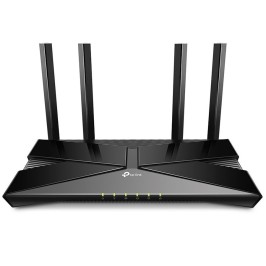
If a portable power station doesn't suit your needs, consider alternatives. To ensure stable internet connection during power outages, you can use backup power for network equipment. For example, modern routers consume little energy and can be powered from a regular power bank for several hours.
For more powerful needs, you can consider stationary generators, although they're less eco-friendly and require fuel. Combining a portable station with a generator provides the greatest flexibility — the station for daily use and quiet nighttime operation, the generator for extended outages and powering high-consumption devices.
Conclusion
Choosing a portable power station in 2026 is an investment in your independence and comfort. When choosing, be guided by real needs: calculate the necessary capacity based on devices you plan to power, ensure sufficient output for your most energy-intensive consumers, and select a model with appropriate socket types.
Combining a power station with solar panels significantly expands autonomous use capabilities, especially for extended trips and camping. Pay attention to battery quality, presence of a reliable management and protection system, and the manufacturer's reputation.
A properly selected portable power station will become your reliable companion on trips, provide peace of mind during emergency power outages, and allow you to enjoy the benefits of civilization even in the most remote corners of nature. Don't forget about proper maintenance and storage — and your station will serve you for many years.
Products related to this post

₴549 грн. ₴699 грн.
Add to Cart
₴3,749 грн.
Add to Cart
₴76,230 грн. ₴101,768 грн.
Add to Cart