



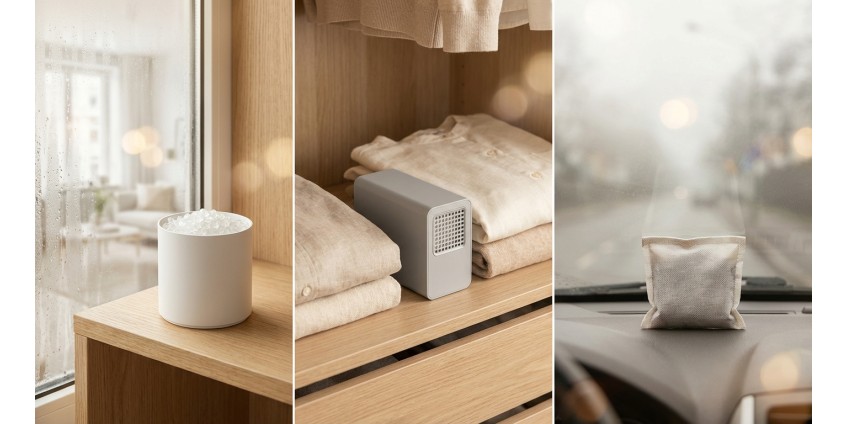
How to Choose a Moisture Absorber for Apartment, Closet and Car: Types, Efficiency and Comparison with Dehumidifiers in 2026
Why It's Important to Control Indoor Humidity Levels
Excessive humidity indoors is not just discomfort, but a serious threat to health and property. High moisture levels create ideal conditions for the development of mold, fungus and dust mites, which can cause allergic reactions and breathing problems. In addition, moisture damages furniture, ruins clothing, books and electronics. This problem is especially relevant in the cold season, when condensation forms on windows due to temperature differences, and moisture accumulates in poorly ventilated rooms.
In 2026, the market offers two main solutions for combating excessive humidity: moisture absorbers and air dehumidifiers. Each of these options has its own advantages and application features, so it's important to understand which device will be optimal for your needs.
What is a Moisture Absorber and How Does It Work
A moisture absorber is a compact device that removes excess moisture from the air using special chemical substances, most commonly silica gel or calcium chloride. The operating principle is very simple: the hygroscopic substance inside the absorber attracts water molecules from the air, and the collected moisture either accumulates in a special reservoir or evaporates outside.
Main advantages of moisture absorbers:
- No electricity required for operation
- Absolutely silent
- Compact and mobile
- Affordable price
- No maintenance required except cartridge replacement
- Ideal for small spaces
Among the disadvantages, we can note the need for regular replacement of the absorbing element and lower efficiency compared to electric dehumidifiers when working in large rooms.
Types of Moisture Absorbers by Purpose
Absorbers for Closets and Wardrobes
Special compact absorbers have been developed for closets and dressing rooms that protect clothing from moisture, mold and unpleasant odors. Such devices usually have a hanging design or compact form that allows them to be placed on a shelf or rod.
An excellent example of such a solution is the hanging moisture, mold and odor absorber for closets and bathrooms 80 g. This device has a convenient hanging design and a moisture saturation indicator that shows when the cartridge needs to be replaced.
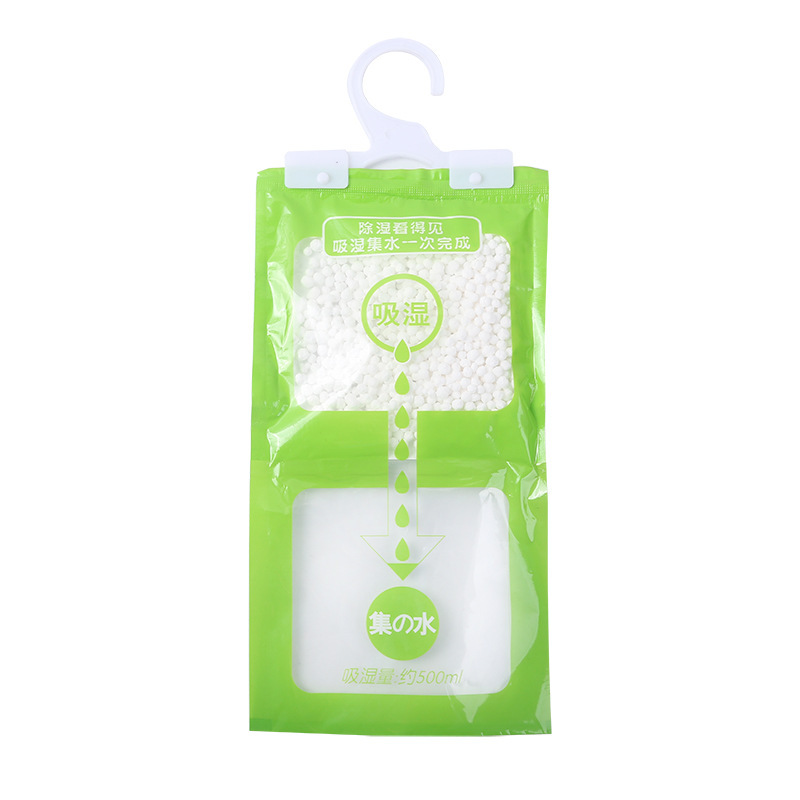
Such absorbers are especially useful for:
- Dressing rooms without ventilation
- Closets with seasonal clothing
- Storing shoes and shoe accessories
- Protecting leather and fur products
Absorbers for Apartment and House
For residential premises, more powerful absorbers with a capacity from 200 g to several kilograms of active substance are used. They work effectively in bathrooms, kitchens, hallways, basements and other rooms with an area of up to 20-30 square meters.
Such devices are often equipped with transparent water collection reservoirs, which allows you to monitor the level of accumulated moisture. Some models have scented cartridges that not only absorb moisture but also freshen the air.
Absorbers for Cars
Car moisture absorbers are compact devices that prevent window fogging, unpleasant odors and corrosion of metal interior elements. They are especially relevant in cold and humid seasons when moisture from the street gets into the cabin.
Car absorbers are usually placed:
- Under the seats
- On the dashboard
- In the trunk
- In organizers and door pockets
For convenient placement of various accessories in the car, you can use special car organizers, which will help keep the moisture absorber and other necessary items in order.
Air Dehumidifiers: When They Are Necessary
Air dehumidifiers are electrical appliances that actively remove moisture from the air using a compressor or adsorption technology. They are significantly more powerful than absorbers and capable of processing large volumes of air.
Main advantages of dehumidifiers:
- High productivity (from 10 to 50 liters per day)
- Ability to regulate humidity levels
- Efficiency in large rooms
- Automatic operation mode
- Long-term operation without replacing consumables
Disadvantages of dehumidifiers:
- High cost (from several thousand hryvnias)
- Electricity consumption
- Noise during operation
- Large dimensions
- Need for regular filter cleaning
If you are looking for other solutions to improve the indoor microclimate, pay attention to air humidifiers, which solve the opposite problem — excessive air dryness.
Comparison of Moisture Absorbers and Dehumidifiers
To make the right choice, let's consider a detailed comparison of these two types of devices:
Application area:
- Absorbers: optimal for rooms up to 20-30 m² (closets, bathrooms, small rooms, cars)
- Dehumidifiers: effective for rooms from 20 m² and larger (apartments, houses, offices, warehouses)
Cost of use:
- Absorbers: low initial cost (50-500 UAH), but require regular cartridge replacement
- Dehumidifiers: high initial cost (3000-15000 UAH), but minimal maintenance costs
Efficiency:
- Absorbers: remove 100-300 ml of moisture per month
- Dehumidifiers: remove 10-50 liters of moisture per day
Ease of use:
- Absorbers: no need to connect to electrical network, absolutely silent, mobile
- Dehumidifiers: require electrical power, create noise, heavy and bulky
How to Choose a Moisture Absorber: Practical Tips
1. Determine the purpose
For a closet, a compact hanging absorber weighing 80-150 g is sufficient. For a bathroom or small room, choose devices with a capacity of 300-500 g. For a car, specialized compact automotive models are suitable.
2. Pay attention to the saturation indicator
Models with a moisture saturation indicator, like the hanging moisture absorber 80 g, allow you to notice in time when the cartridge needs to be replaced, which prevents a decrease in efficiency.
3. Evaluate the operating duration
A standard absorber weighing 100-200 g works from 1 to 3 months depending on the humidity level in the room. For very humid rooms, choose models with larger capacity or consider using a dehumidifier.
4. Check the safety of the design
If there are children or pets in the house, choose absorbers with reliable protection against liquid spillage and access to chemicals. The body should be sturdy, preferably with a non-slip bottom.
5. Additional features
Some absorbers have scented cartridges that not only fight moisture but also freshen the air. This is especially useful for closets, bathrooms and cars.
When to Choose a Dehumidifier Instead of an Absorber
An air dehumidifier will be a better choice in the following cases:
- You have a large apartment or private house with a constant humidity problem
- The humidity level exceeds 70-80%
- There is visible mold on the walls or ceiling in the room
- You live in a humid climate or on the first floor
- The house has a basement or ground floor
- You need to quickly dry the room after renovation or flooding
For small local tasks — protecting a closet, drying a bathroom with an area of 3-5 m² or a car interior — a moisture absorber will be an optimal and economically viable solution.
Care and Maintenance of Moisture Absorbers
Moisture absorbers do not require complex maintenance, but following simple rules will extend their effective operation:
- Regularly check the level of accumulated moisture and the state of the saturation indicator
- Replace cartridges or absorbing substance in a timely manner
- Place the absorber on a stable surface to avoid tipping over
- Do not install the device near heat sources
- Dispose of used cartridges according to the manufacturer's instructions
- Periodically wipe the absorber body from dust
Practical Summary: What to Choose for Different Situations
For closet and wardrobe: compact hanging moisture absorber with saturation indicator, weighing 80-150 g. It will protect clothing from moisture, mold and unpleasant odors without using electricity.
For bathroom: moisture absorber with a capacity of 300-500 g or a compact dehumidifier if the area exceeds 5-7 m² and humidity is very high.
For car: specialized compact car moisture absorber that can be placed under the seat or on the dashboard.
For apartment in general: if the humidity problem is local (one or two rooms), use several absorbers. If humidity is elevated throughout the apartment — invest in a quality air dehumidifier with the ability to regulate humidity levels.
For private house: combined approach — dehumidifier for main rooms and absorbers for closets, pantries, garage and other auxiliary rooms.
In 2026, the market offers a wide selection of humidity control solutions — from affordable absorbers for 79 hryvnias to professional dehumidifiers. The right choice depends on the scale of the problem, room area and your budget. The main thing is not to ignore the problem of excessive humidity, as it affects health, comfort and property preservation.
Products related to this post

₴79 грн.
Add to Cart
₴76,230 грн. ₴101,768 грн.
Add to Cart