



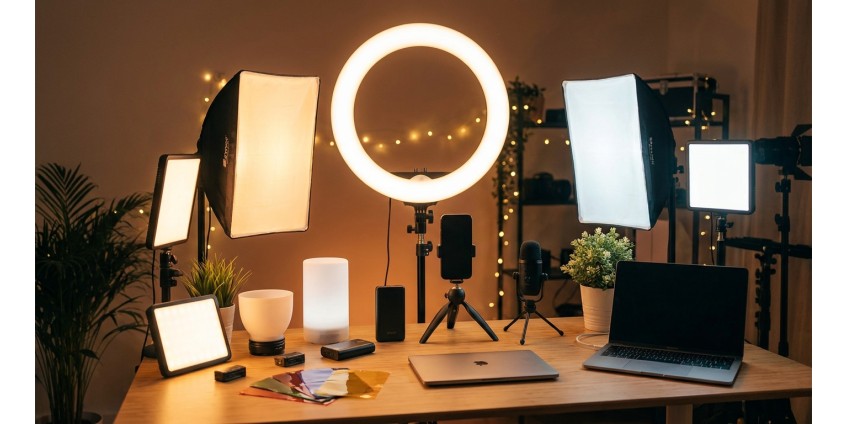
How to Choose Studio Lighting for Bloggers, Streamers, and TikTok in 2026: Lamp Types, Color Temperature, Ring Light Sizes, and
Quality lighting is half the success of any video content. Whether you're creating TikTok videos, streaming on Twitch, recording YouTube reviews, or teaching online courses — proper studio lighting improves picture quality, makes your face more expressive, and adds professionalism to your content. In 2026, the choice of lighting equipment has become even wider, but at the same time more confusing. In this article, we'll thoroughly examine what to look for when choosing studio lighting, what types of lamps exist, what color temperature means, which ring light sizes suit different tasks, and how to find the optimal solution for your budget.
Why Studio Lighting is Critical for Content Creators
Modern smartphones and cameras have excellent sensors, but even the most expensive equipment won't save your footage with poor lighting. Dark shadows on the face, uneven skin tone, gray and dull background — all of this repels viewers and reduces engagement. Professional studio lighting solves these problems: it evens out facial tone, adds dimension, creates pleasant eye reflections (catchlight), and makes the overall picture brighter and more attractive.
For bloggers shooting beauty content, lighting should be soft and even to show makeup textures and shades. Streamers need stable, flicker-free lighting that doesn't tire the eyes during multi-hour broadcasts. TikTok creators value compactness and mobility, as they often shoot in different locations. All these needs can be met with the right choice of studio lighting.
Main Types of Studio Lighting
Ring Light
Ring lights are the most popular choice among bloggers and TikTok creators. Their distinctive feature is a circular shape with a hole in the middle where you mount a camera or smartphone. This design provides even facial lighting from all sides without harsh shadows. Ring lights create a characteristic circular reflection in the pupils, making the gaze more expressive and lively.
Ring light diameters range from 10 to 48 cm and larger. Small 10-inch (25 cm) models are suitable for selfies and mobile shooting, easy to transport. 14-18-inch (35-45 cm) rings are the golden mean for home studios, providing enough light for waist-up shots. Large 18+ inch (45+ cm) lights are used by professional makeup artists and photographers for full-length portraits and commercial shoots.
Panel Light (LED Panel)
LED panels are rectangular or square lights with numerous LEDs. They provide powerful and even lighting, ideal for streaming and video blogs. Panels often have brightness and color temperature adjustment, allowing you to adapt lighting to different shooting conditions. Panel lights can be mounted on stands, attached to desks, or ceiling-mounted.
The advantage of panels is their versatility — they're suitable not only for portraits but also for product photography, unboxings, and gadget reviews. If you plan to shoot not only yourself but also products or demonstrate something on a table, panel lighting will be a more practical choice.
Softboxes and Umbrellas
Softboxes are special lamp attachments that diffuse light and make it soft. They create natural lighting without harsh shadows, ideal for portraits. Umbrellas work on a similar principle — reflecting or diffusing light. These solutions are more commonly used by professional photographers and videographers, but they're also suitable for home studios if you want to achieve cinematic quality.
Color Temperature: What It Is and Why It Matters
Color temperature is measured in Kelvins (K) and determines the light shade — from warm yellowish to cool bluish. For video content, this is a critically important parameter, as incorrect temperature can make skin look unhealthy or distort colors.
Main color temperature ranges:
- 2700-3200K — warm light, similar to traditional incandescent bulbs. Creates a cozy atmosphere but can make video too yellow.
- 4000-4500K — neutral white light, close to daylight. Universal option for most tasks.
- 5500-6500K — cool daylight, similar to bright sunny day. Suitable for beauty content and product photography where color accuracy is important.
Most modern studio lights have color temperature adjustment (bicolor or RGB), allowing you to configure lighting for specific situations. This is especially useful if you shoot at different times of day or in rooms with different natural lighting.
Power and Brightness: How Much Light Do You Need
Studio light power is measured in watts (W) or lumens (lm). For a home studio and blog shooting, lights with 30-60W power are sufficient. If you're shooting in a large room or need background lighting, look for models from 80W and up.
An important parameter is brightness adjustment capability (dimmer). This allows you to precisely adjust light intensity to your needs without changing the distance to the light. A dimmer is especially useful for streamers who spend a lot of time in front of the camera — you can reduce brightness so your eyes don't get tired.
Ring Light Sizes: Which to Choose
Choosing ring light size depends on content type and shooting conditions:
10-12 inches (25-30 cm)
Compact models for mobile bloggers. Ideal for selfies, short TikTok videos, Instagram Stories. Easily fit in a bag, can be taken on location shoots. Disadvantage — limited power, suitable only for close-up face shots.
14-16 inches (35-40 cm)
The most popular size for home studios. Provides sufficient lighting for waist-up shots, suitable for beauty blogs, streaming, video calls. Balance between power and compactness. Most models of this size have brightness and color temperature adjustment.
18+ inches (45+ cm)
Professional lights for serious projects. Provide powerful and even lighting even for full-length portraits. Suitable for commercial shoots, professional photo sessions, makeup artists. Require more space and a stable stand.
Additional Features and Accessories
Modern studio lights offer many useful features:
- Remote control — remote or smartphone control via Bluetooth allows you to change settings without approaching the light.
- RGB mode — ability to change light color for creative effects and color accents.
- Built-in battery — mobility and independence from outlets, useful for location shoots.
- Smartphone holder — many ring lights come with holders, making them a ready solution for mobile blogging.
- Tripod stand — adjustable height allows you to set the optimal lighting angle.
If you're serious about content creation, consider additional accessories: diffusers for softer light, color filters, additional stands for multi-point lighting. To organize all your equipment, you'll need cable organizers to keep your home studio looking neat.
Budget Solutions for Beginners
You don't have to spend thousands on professional equipment if you're just starting out. A basic ring light with 26-30 cm diameter with brightness adjustment and tripod can be found for 800-1500 UAH. Such models are quite suitable for beginner level and will help significantly improve your video quality.
Entry-level LED panels cost from 1000 UAH. They're less powerful than professional ones, but quite sufficient for a home studio. The main thing — make sure the light has brightness and color temperature adjustment, these are basic features that are hard to do without.
An alternative option — use natural window lighting as the main light source, and a budget light as fill light to eliminate shadows. This scheme gives excellent results with minimal investment.
Lighting Schemes: Basics of Light Setup
Even the best equipment won't help if positioned incorrectly. Here are basic lighting schemes for content creators:
Single-Point Lighting
The simplest scheme — one light source (ring or panel) positioned directly in front of you or slightly above eye level. Suitable for TikTok, Instagram, simple video blogs. Minimal equipment, quick setup.
Two-Point Lighting
Key light is positioned at a 45° angle to the side of the camera, fill light of lower intensity — on the opposite side to soften shadows. This scheme creates volume and depth, makes the picture more professional.
Three-Point Lighting
Classic Hollywood scheme: key light, fill light, and back light behind the subject. Back light separates you from the background, creates depth effect and professional look. Ideal for serious video projects and streaming.
Combining with Other Equipment
Studio lighting is important but not the only component of quality content. For professional picture you also need:
- Quality camera or smartphone — even perfect lighting won't compensate for poor optics. Modern smartphones have excellent cameras, sufficient for most tasks.
- Microphone — sound is no less important than picture. Built-in camera and phone microphones are often insufficient for quality audio.
- Background or backdrop — solid background or special photo backdrop makes the picture cleaner and more professional.
- Stabilizer — for dynamic shooting you'll need a steadicam or gimbal to keep the picture smooth.
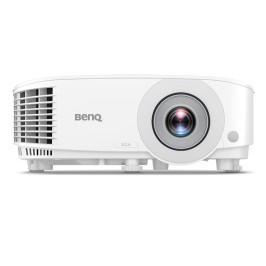
If you also create presentations or educational materials, you might need a projector for content demonstration. This expands possibilities for diverse content.
Studio Lighting Care Tips
To make your equipment last long:
- Don't leave lights on at maximum power for extended periods without necessity — this shortens LED lifespan.
- Regularly wipe light surfaces from dust — contamination reduces brightness and changes color temperature.
- Store equipment in a dry place, avoid moisture exposure.
- Check reliability of mounts and stands before each shoot — falling can damage the light.
- Use voltage stabilizers if your network has frequent fluctuations — this protects electronics.
Conclusions: How to Choose the Perfect Studio Lighting
Choosing studio lighting depends on your specific needs, content type, and budget. For mobile bloggers and TikTok creators, the optimal choice will be a compact 10-12 inch ring light with smartphone holder. Streamers and video bloggers shooting from one location should consider a 14-16 inch ring light or LED panel with color temperature and brightness adjustment.
Be sure to pay attention to color temperature adjustment capability (minimum 3200-5600K) and brightness — these are basic features that provide setup flexibility. 30-50W power is sufficient for most home studios. If you plan location shoots, look for models with built-in battery.
Don't forget about additional accessories: reliable tripod, smartphone or camera holders, possibly diffusers for softer light. Start with a basic set and gradually expand your arsenal, experimenting with lighting schemes. Quality studio lighting is an investment that will pay off with improved content quality, audience growth, and new monetization opportunities. Happy shooting!
Products related to this post
₴79 грн.
Add to Cart
![Collectible figure Labubu Toy [FDM printing]](https://gadgetguys.com.ua/image/cache/catalog/easyphoto/5906/grashka-ruhliva-red-panda-chervona-panda-fdm-druk-1-266x266.png "Collectible figure Labubu Toy [FDM printing]")
₴23,625 грн. ₴31,540 грн.
Add to Cart